Roof Pitch Calculator
Calculate roof pitch, slope percent, roof angle, rafter length, and rafter length with optional overhang from rise and run.
- roof slope
- rafter length
- roof angle
- rise run
- pitch x 12
Vertical roof rise in inches.
Horizontal roof run in inches.
Advanced optionsOptional issuer and comparison assumptions
Optional horizontal overhang in inches.
Optional full roof span in inches. If blank, span is estimated as 2 x run.
Status: initial
Results
Awaiting calculation
4.00:12 roof pitch
33.33% slope at 18.43°. Estimated rafter length with the selected overhang is 151.79 inches; slope factor is 1.05.
Use the pitch result safely
- 1Confirm rise and run were measured over the same horizontal segment.
- 2Open Advanced options for overhang and full-span assumptions used in framing estimates.
- 3Check manufacturer minimum slope, local code, structural design, and fall-protection requirements before work.
Run is horizontal distance, not the full roof span. Material suitability, structural design, and fall protection require project-specific guidance.
Introduction
The Roof Pitch Calculator converts rise and run into pitch, slope percent, angle, rafter length, and optional overhang-adjusted rafter length for early roofing and framing planning.
What is roof pitch?
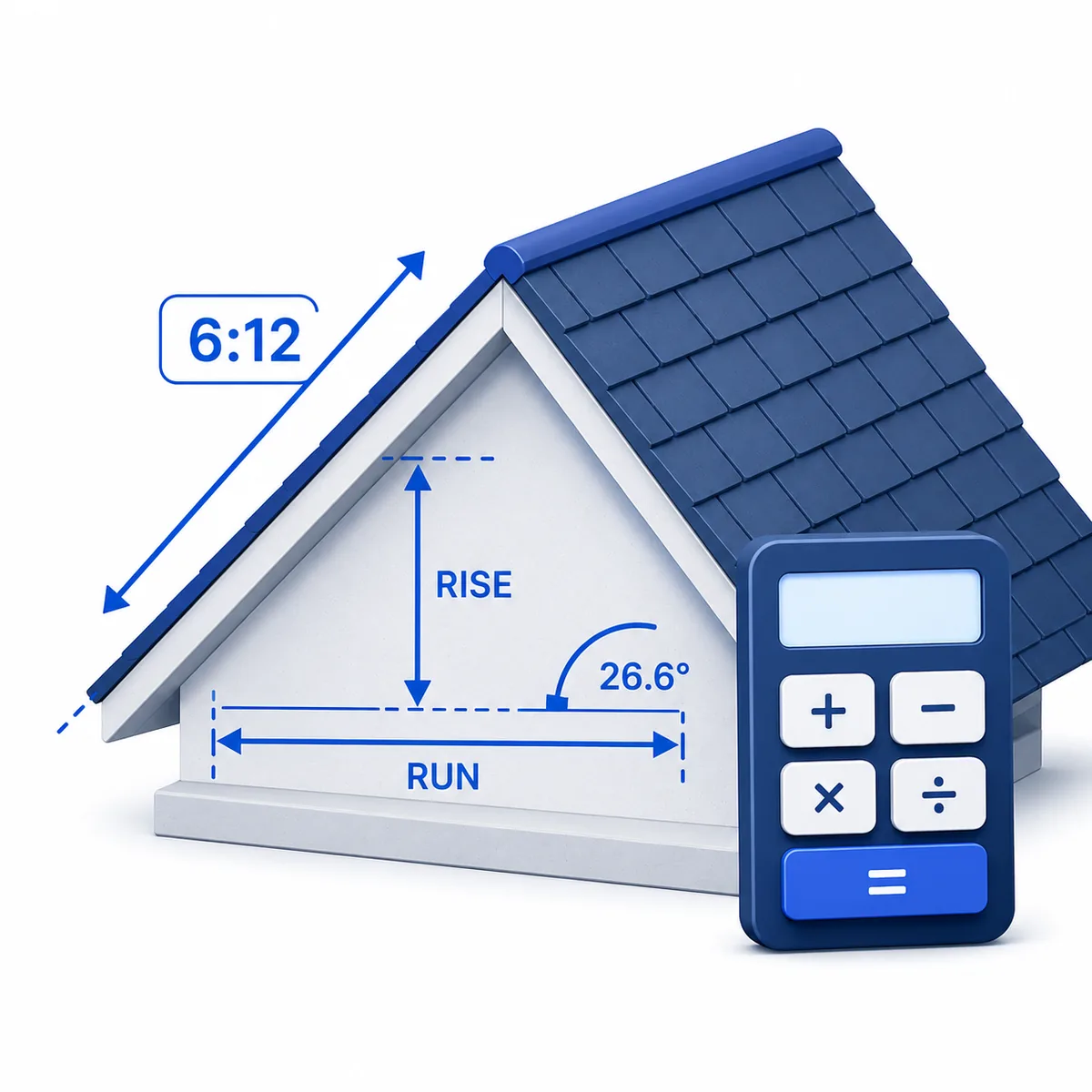
Roof pitch describes how steep a roof is. In many building contexts, it is written as inches of rise for every 12 inches of horizontal run, such as 4:12 or 6:12.
Roof pitch formula
The calculator divides rise by run to find slope, multiplies that value by 12 to express pitch as x:12, converts the slope to an angle, uses the Pythagorean theorem for rafter length, and shows slope factors used for area and framing estimates.
Variable explanations
Understand what each input and result means before calculating.
Rise
The vertical height from the roof base line to the higher point.
Run
The horizontal distance from the wall line to the ridge or high point.
Pitch
The roof rise over a standard 12 inches of run.
Angle
The roof slope expressed in degrees.
Rafter length
The diagonal estimate from rise and run.
Slope factor
A multiplier for estimating sloped roof area from plan area.
Roof span
Optional full span. For simple gable roofs, run is often half of span.
Reviewed by the Calculator.org.in Editorial Team
Formula behavior, validation cases, explanatory examples, and cited sources are checked before publication. This review supports educational accuracy and is not a substitute for qualified professional advice.
Last reviewed: 2026-08-25
Formula guide
See the calculation logic, variable definitions, and practical meaning.
Pitch x:12
Pitch = Rise / Run x 12
- Rise is vertical height.
- Run is horizontal distance.
This gives the familiar roofing pitch format such as 4:12.
Slope percent
Slope Percent = Rise / Run x 100
- Slope percent is another way to express steepness.
A 4:12 roof is about 33.33% slope.
Roof angle
Angle = arctan(Rise / Run)
- Angle is measured from the horizontal run.
This converts roof pitch into degrees.
Rafter length
Rafter Length = sqrt(Rise^2 + Run^2)
- Rise and run form a right triangle.
This estimates the diagonal rafter line length before construction allowances.
Slope factor
Slope Factor = Rafter Length / Run
- Slope factor converts plan area to sloped roof surface area.
For rough material planning, roof surface area is often estimated as plan area times slope factor.
Hip and valley factor
Hip/Valley Factor = sqrt(2 + (pitch / 12)^2)
- Used as a geometry reference for hip and valley line lengths.
Actual hip and valley cuts still depend on roof layout and framing details.
Worked examples
Follow realistic inputs through the calculation step by step.
Worked example
Common roof pitch
- 1Rise is 48 inches.
- 2Run is 144 inches.
- 3Pitch is 4:12.
Worked example
Rafter estimate
- 1Use rise and run as right-triangle legs.
- 2Apply the Pythagorean theorem.
- 3Review the result before ordering material.
Worked example
Overhang planning
- 1Enter horizontal overhang.
- 2The calculator extends the rafter line.
- 3Verify real cut length on site.
Worked example
Roof area multiplier
- 1Calculate pitch from rise and run.
- 2Review slope factor.
- 3Multiply plan area by slope factor for a rough sloped-area estimate.
Worked example
Material slope check
- 1Review pitch category and material guidance.
- 2Check the roofing manufacturer's minimum slope.
- 3Confirm underlayment and fastening requirements before installation.
Common mistakes
Avoid these common input and interpretation errors.
Mixing span and run
Run is usually half the total roof span for a simple gable roof.
Ignoring overhang
Rafter tails and eaves can require more material than the base rafter line.
Treating pitch as material approval
Roofing products often have minimum slope requirements.
Using full span as run
For many simple gable roofs, run is half the full building span. Using full span can halve the calculated pitch.
Ignoring slope factor
A steep roof has more sloped surface area than the same plan footprint.
Skipping field verification
Always confirm actual site measurements before cutting rafters.
Frequently asked questions
Quick answers to the questions users ask most often.
What does this Roof Pitch Calculator calculate?
What is roof pitch?
How do I calculate roof pitch?
What is a 4:12 roof pitch?
How do I convert roof pitch to degrees?
How is slope percent calculated?
How is rafter length calculated?
What is roof slope factor?
What is a hip and valley factor?
Does this include roof overhang?
Is run the same as roof span?
Can this calculator design a roof?
Does pitch affect roofing materials?
What is the minimum pitch for asphalt shingles?
What is the minimum pitch for metal roofing?
Can I use feet instead of inches?
What is a low slope roof?
What is a steep roof?
Should I cut rafters from this result alone?
References
Sources used to support the calculator guidance.
Related calculators
Continue with calculators that solve nearby problems.
Version history
A transparent record of calculator content updates.
- 1.2.0 · 2026-08-25
Added a result-aware pitch, angle, rafter, and slope-factor summary with focused framing and safety checks.
- 1.1.0 · 2026-08-03
Added slope factor, hip/valley factor, pitch reference chart, material slope guidance, span input, and measurement checklist.
- 1.0.0 · 2026-07-05
Initial roof pitch calculator release.