Gravel Calculator
Estimate gravel area, cubic feet, cubic yards, tons, tons with waste, and optional material cost from project dimensions.
- gravel tons
- gravel cubic yards
- crushed stone
- pea gravel
- driveway gravel
Enter project length in feet.
Enter project width in feet.
Enter gravel depth in inches.
Advanced optionsOptional issuer and comparison assumptions
Typical gravel is often around 1.4 to 1.7 tons per cubic yard.
Optional extra percentage for compacted base layers. Use 0 for loose decorative cover.
Optional extra percentage for compaction, uneven ground, and ordering variation.
Optional material price for a rough cost estimate.
Status: initial
Results
Awaiting calculation
3.25 tons suggested for delivery
200 sq ft at 3 inches deep equals about 1.85 cubic yards or 2.78 tons before allowances, roughly 130 fifty-pound bags.
Use this result well
- 1Measure the finished area and choose a compacted depth suitable for the project layer.
- 2Replace the default tons-per-yard value with the supplier's figure for the exact gravel product.
- 3Confirm compaction, waste, truck minimums, and order rounding before scheduling delivery.
Supplier density, moisture, compaction, grading, and delivery increments can change the final order.
Introduction
The Gravel Calculator estimates cubic yards, tons, waste-adjusted tons, and optional material cost for driveways, paths, drainage areas, parking pads, garden beds, and base layers.
Purpose
Use this calculator for early gravel planning, driveway estimates, path coverage, density checks, and ordering conversations before confirming material type, delivery rounding, compaction, and final quantity with your supplier or contractor.
How gravel volume and tons are calculated
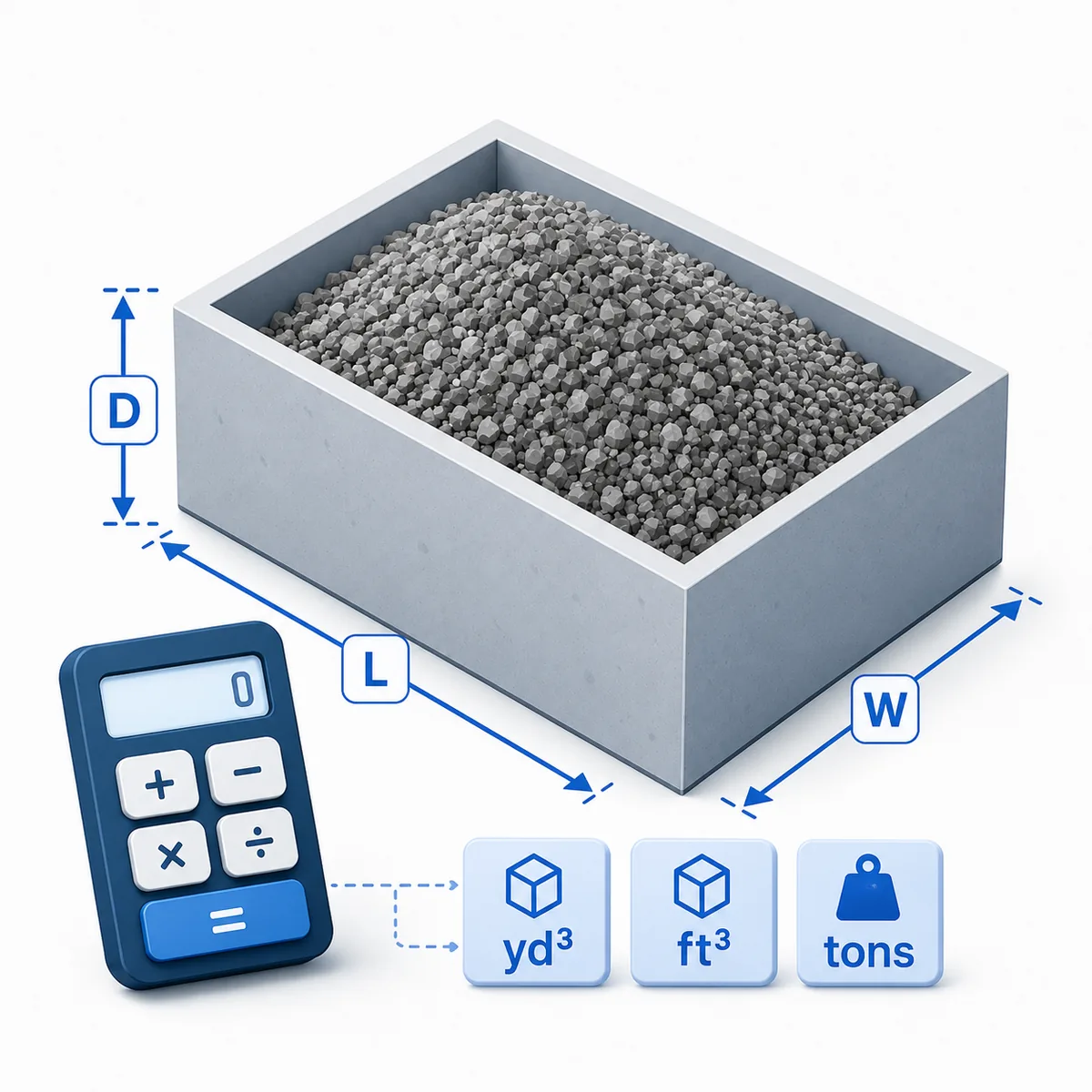
The calculator multiplies length by width to find area, converts depth from inches to feet, calculates cubic feet, divides by 27 for cubic yards, then multiplies by tons per cubic yard.
Variable explanations
Understand what each input and result means before calculating.
Length
The project length in feet.
Width
The project width in feet.
Depth
The planned gravel depth in inches.
Tons per cubic yard
The material density factor used to convert cubic yards to tons.
Waste allowance
Optional extra material for compaction, uneven areas, and supplier rounding.
Compaction allowance
Extra material for compacted base layers, especially driveways and patios.
Price per ton
Optional material price used only for a rough cost estimate.
Reviewed by the Calculator.org.in Editorial Team
Formula behavior, validation cases, explanatory examples, and cited sources are checked before publication. This review supports educational accuracy and is not a substitute for qualified professional advice.
Last reviewed: 2026-08-25
Formula guide
See the calculation logic, variable definitions, and practical meaning.
Cubic yards
Cubic yards = length x width x depth(ft) / 27
- Length and width are in feet.
- Depth is converted from inches to feet.
Cubic yards are a common bulk material volume unit.
Tons
Tons = cubic yards x tons per cubic yard
- Density varies by gravel type, moisture, and compaction.
Many suppliers sell gravel by weight, so density matters.
Tons with waste
Tons with waste = tons x (1 + compaction / 100) x (1 + waste / 100)
- Compaction is useful for base layers.
- Waste accounts for uneven ground, spillage, and ordering variation.
Compaction and waste are applied after the base ton estimate.
Coverage per ton
Coverage per ton = (1 / tons per cubic yard) x 27 / depth(ft)
- Coverage changes with depth and material density.
This helps compare supplier coverage rules such as square feet per ton.
Bag equivalent
50 lb bags = suggested order tons x 2,000 / 50
- Bulk orders are often by ton.
- Small projects may use bags.
The bag estimate is rounded up for planning only.
Worked examples
Follow realistic inputs through the calculation step by step.
Worked example
Garden path
- 1Enter path length and width.
- 2Set depth to 2 or 3 inches.
- 3Review cubic yards and tons.
Worked example
Driveway layer
- 1Enter driveway dimensions.
- 2Use a deeper gravel layer.
- 3Add compaction allowance for base material and confirm density with the supplier.
Worked example
Pea gravel coverage
- 1Use a shallower decorative depth such as 2 to 3 inches.
- 2Choose a density appropriate for pea gravel.
- 3Check coverage per ton before ordering.
Worked example
Bulk versus bags
- 1Review suggested order tons for bulk delivery.
- 2Use the 50 lb bag equivalent for small projects.
- 3Confirm minimum delivery quantities and bag weights locally.
Worked example
Drainage area
- 1Measure the drainage bed.
- 2Enter depth in inches.
- 3Add waste for uneven ground.
Worked example
Budget estimate
- 1Enter price per ton.
- 2Calculate tons with waste.
- 3Use cost as planning context only.
Common mistakes
Avoid these common input and interpretation errors.
Forgetting depth conversion
Depth in inches must be divided by 12 before multiplying by area.
Assuming one density for all gravel
Pea gravel, crushed stone, base material, and wet gravel can have different weights.
Skipping waste
Compaction, grading, and supplier rounding can increase the ordered amount.
Combining compaction and waste blindly
Use compaction for compacted base layers and waste for spillage or uneven areas. Decorative loose gravel may not need both.
Ignoring delivery minimums
Suppliers may round bulk orders to fixed increments or require minimum tonnage.
Confusing yards and tons
Cubic yards measure volume; tons measure weight.
Frequently asked questions
Quick answers to the questions users ask most often.
What does this Gravel Calculator calculate?
What formula is used?
Why is depth entered in inches?
How many cubic feet are in a cubic yard?
How many tons are in a cubic yard of gravel?
What density should I use?
Does this calculate pea gravel?
Does this calculate crushed stone?
Should I add waste?
Should I add compaction allowance?
How much area does one ton of gravel cover?
How many 50 lb bags are in a ton?
Does this include delivery cost?
Can this calculate a circular area?
Can this calculate multiple layers?
What depth should I use for a gravel driveway?
What depth should I use for a gravel path?
Is this exact?
Why do suppliers sell by ton?
Can I use this for sand or soil?
References
Sources used to support the calculator guidance.
Related calculators
Continue with calculators that solve nearby problems.
Version history
A transparent record of calculator content updates.
- 1.2.0 · 2026-08-25
Added a live delivery summary and simplified advanced density, compaction, waste, and cost inputs.
- 1.1.0 · 2026-08-03
Added compaction allowance, coverage per ton, suggested bulk order, bag equivalents, density reference, and depth guidance.
- 1.0.0 · 2026-07-05
Initial gravel volume and tonnage calculator release.